
Clinch County Multi-Day Arrest Records
Start with the Clinch County Sheriff's Office, since it runs the county jail. The public page lists agency and contact details. It carries no multi-day booking blotter, no rolling arrest log, and no date-range archive or paginated roster. That gap is separate from the missing same-day feed. It does not mean jail records fail to exist.
For a weekend, holiday, or several business days, request an existing jail register or booking record limited by dates. A narrow ask beats a vague demand for everything. State your beginning and ending dates. Say whether you want commitments, discharges, or both. If an electronic format already exists, ask for it in that native form. The office can explain what it holds, what may be redacted, and any lawful cost before it produces the record.
Request Clinch County Arrest Reports
Georgia law gives you a fallback when nothing is posted online. O.C.G.A. §42-4-7 requires the sheriff to keep a jail record. That record is examinable under the Georgia Open Records Act. Ask for the existing record, not a custom analysis. For same-day questions, use the separate Arrested Today route.
- Define the exact date range and whether it includes booking, release, or both.
- Contact the sheriff at 115 Court Square, Homerville, Georgia 31634, or call 912-487-5316 to identify the records custodian and accepted delivery method.
- Describe the existing jail register or booking entries sought. Add a name only if the request is person-specific.
- Ask in advance about redactions, inspection options, electronic format, and any estimated fee.
- Keep the response, production date, and source label with the records so later changes are not mistaken for contradictions.
The sheriff's page posts no fixed records hours, fee schedule, or full online workflow. Confirm those details before you travel. Georgia's Attorney General offers an Open Government FAQ, though the local custodian remains the authority on the actual Clinch record.
Clinch Arrest Report Fields
A statutory record beats an imagined web form. Clinch County has published no standard field set online. The table splits required jail-register content from operational details that may simply appear in a released record.
| Field | How to interpret it |
|---|---|
| Name, age, sex, race | Identity and descriptive fields named in Georgia's jail-record law; match carefully. |
| Process or committing court | The warrant, process, or court authority behind commitment, not a conviction. |
| Crime charged | The charge recorded at booking; wording may later change. |
| Date committed | The jail-entry date, which may differ from the time of arrest. |
| Discharge day and order | The recorded release and authority directing it; release does not end the court case. |
| Agency, booking number, bond | Useful operational fields when supplied, but not all were observed in a public Clinch interface. |
A booking photo is sensitive and governed by separate Georgia rules. No photo gallery follows from the jail-record statute. None is hosted here. When charges appear, describe the person as charged with, and let the court disposition give the final result.
Multi-Day Reports Catch Timing Gaps
Stretch a request across several days and you catch entries a 24-hour window slides past. Arrest, booking, and release can each land on a different date. Transfers complicate the picture further. Homerville Police may make the arrest while the sheriff or a state agency holds the person, and the court sits somewhere else entirely.
Clinch County publishes no fixed cutoff time for its reports. The office sets no stated update rhythm, and no overnight delay or holiday practice appears in its materials. A Monday report, then, should not be read as an automatic weekend batch. Name the range plainly and ask whether the numbers rest on commitment date or arrest date. For one person, the Clinch County recent arrests resource sorts out jail, court, state, and federal custody paths.
Clinch Jail Record Retention
The Georgia Archives retention schedule keeps jail booking records for ten years after release. Jail registers last ten years after the final entry. Investigation logs follow a separate three-year schedule. These periods concern record retention only. They promise no ten-year online arrest archive, no searchable database, and no automatic transfer to Georgia Archives.
The schedule view below shows why retention is a records-management fact, not a live search tool.
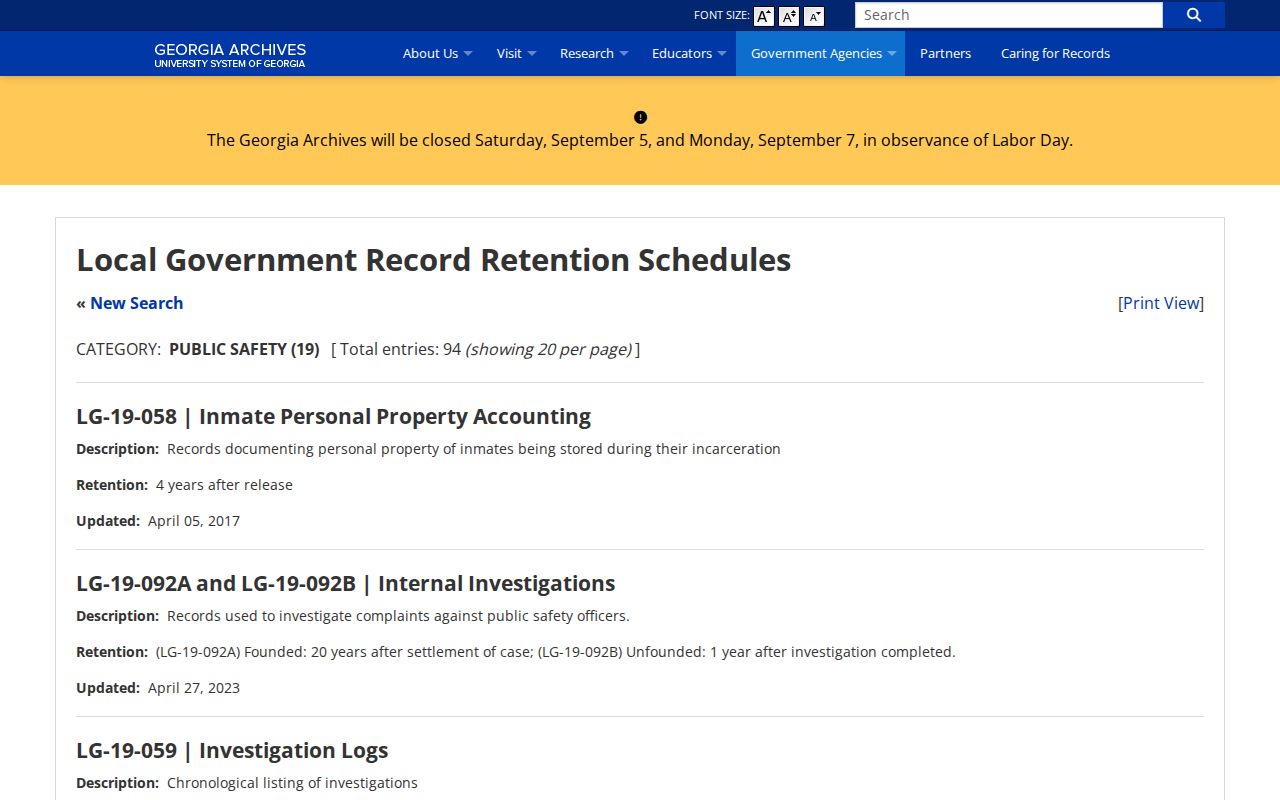
Ask the county custodian first for modern Clinch County jail material. Georgia Archives notes that ordinary county records generally stay local. It can still guide you toward early records, microfilm, and historical collections.
Clinch Arrest News Is Selective
The Clinch County News and WALB's Clinch County coverage cover selected cases only. Their articles can name an event, a date, and an agency statement. Neither is a complete jail register. Event-driven stories may run well after an arrest. They may skip routine bookings, or trail off before a case ends.
The WALB county page shown here displays a regional news stream. It is not an official arrest log.
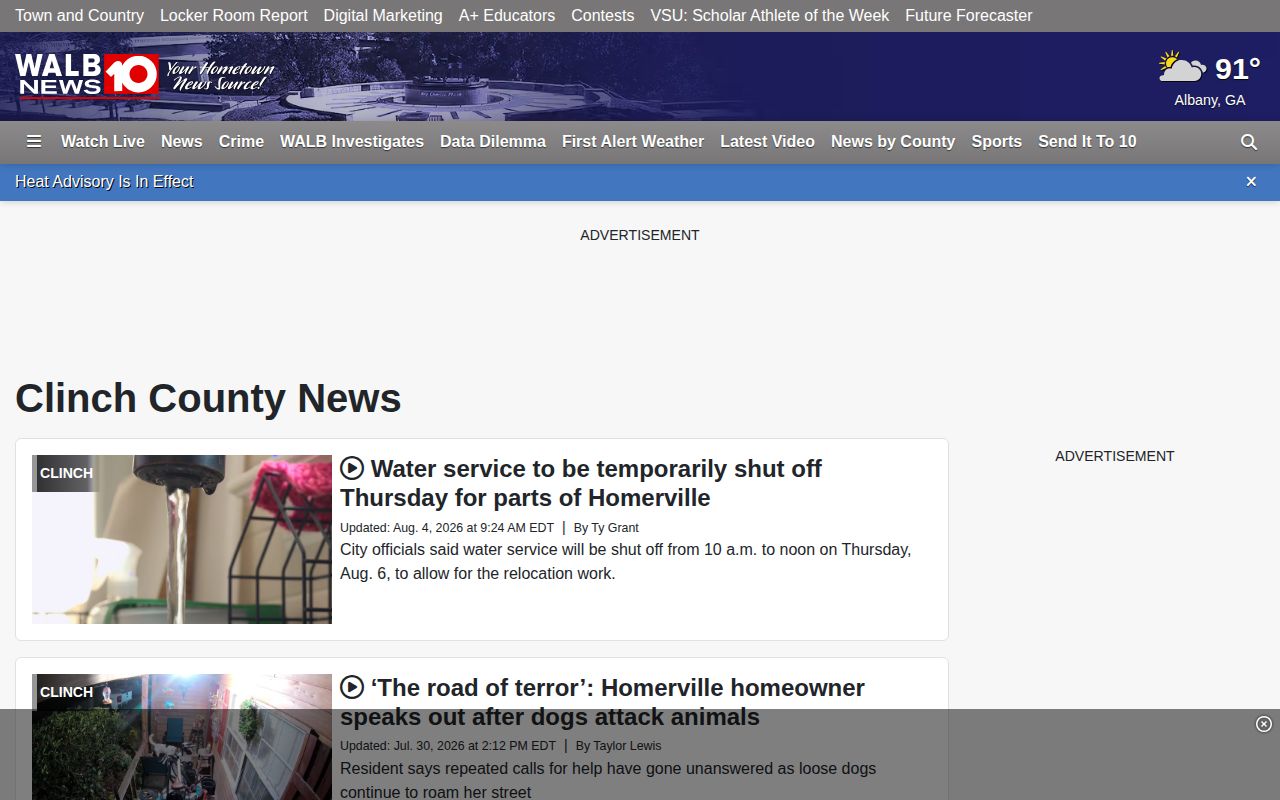
Note any story's publication date before you cite it, and name the agency it quotes. Silence in the news proves nothing about an arrest. A missing headline is not a missing booking.
Compare Clinch Arrest Record Types
A jail record, a court case, and a news archive overlap but are not interchangeable. The right source depends on your question. Past commitment, final legal outcome, or public reporting each points to a different record.
| Source | Best use | Limit |
|---|---|---|
| Sheriff jail record | Booking, commitment, charge, and discharge fields | Not necessarily the final disposition |
| Superior or Magistrate Court | Warrants, hearings, bail, case filings, and outcome | Not a live custody tracker |
| Georgia Department of Corrections | Current state-facility custody after sentencing | Not a county arrest log |
| Local news archive | Selected narrative context | Incomplete and sometimes delayed |
The Georgia Department of Corrections offender search works only after a person enters state custody. A released county detainee can vanish from a current roster. The booking record and court case remain. Attach a checked date to every result.
Older Clinch Arrest Research
Older Clinch County arrest records start with a question to the local custodian. Ask whether the record survives. Ask about its format and the retention schedule that applies. Just because a booking entry is not online does not mean it was destroyed. The same goes for a statewide schedule. It does not mean the paper moved to the state level. The Georgia Archives research-help page explains its role. It helps when the county route hits older material.
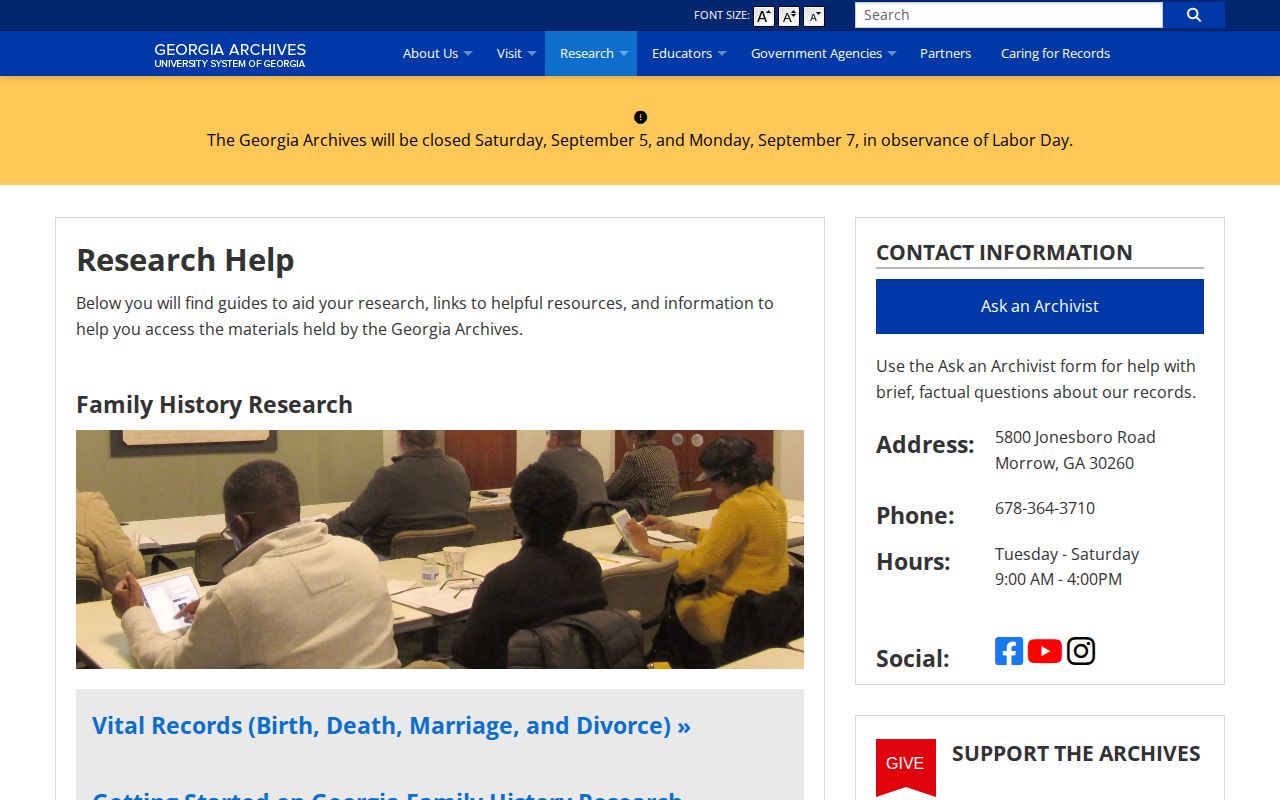
Very old context can come from archive collections. It can also come from historic newspapers. These often captured public reporting of arrests in Clinch County at the time. Keep the original dates and source labels attached. These items are context, not proof of where a record sits today. They should never be presented as a statement of a person's current status.
Make Clinch Arrest Requests Precise
A strong request names the record and leaves no doubt about scope. Give the exact date range. Say whether it runs from commitment or discharge, and name the format you want. To reconcile a known Clinch County booking, include the agency's spelling of the name. Add any booking reference you hold. Do not ask the custodian to build a narrative, draw conclusions, or invent statistics that do not exist.
Ask which fields get redacted and why. Social Security numbers stay protected. So do medical and financial details. Public access and unrestricted republication are separate legal questions, and a jail register being examinable does not unlock either one.
Public Record Search
Sponsored Results